TCA Peel is a
Chemical Cosmetic Skin Peel - by Perfect Complexion.net
TCA Chemical Skin Peel
Instructions
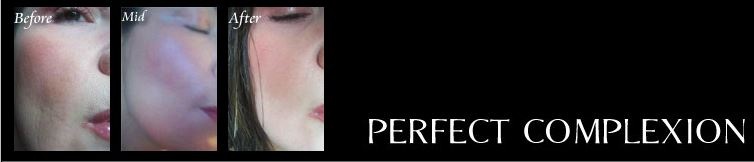
>>> PROFESSIONAL TCA
FACIAL PEEL <<<
Remove Acne Scars, Age Spots, and
Fine Lines
For Help with: For Help
with: Acne Scar Removal - Age Spots - Fine Lines - Injury
Scars - Sun-Damaged Skin - Hormonal Mask - Remove Liver
Spots - Large Pores - Hyperpigmentation - Pimples - Fine
Lines - Freckling - Crow's Feet - Flaky Skin - Lip
Creases - Order TCA
Peel >>>
TCA Chemical Skin Peel
Instructions
by PerfectComplexion.net
Got Questions? Call
Julie! 443-835-5538
Perfect
Complexion Skin Care Clients have the tools to......
1- Never age another day (facially)
2- Take 10 + years off of your skin due to poor skin
health (sun, scarring, lines and pigment)
3- Have 110% confidence in your ability to open up your
own little skin store in your own bathroom serving 1 very
special customer. You!
4- Save thousands of dollars and avoid having any plastic
surgery for reverse aging.
5- Move onto your next hurdle in life. Once you have this
skin-thing nailed you will have new energy! There is just
something that hinders those of us who have (or have had)
skin issues.
6- There is no magic here. These products give you the
tools to grow new skin. There are alot of misconceptions
you have to part with. I can tell you what they are but
the truth is you will discover them on your own!
"I would never have been able to afford this
treatment. No, not in a million years. My dermatologist
wanted $150 for each visit just to do one lower half of
my face" This entire project cost me $65 including
shipping and I have almost over half of a bottle left".
You won't ever know what you did for me...."....
I joke many times that many of my customers have more
applicable knowledge in the field of aesthetics and peels
than most of the employed skin care professionals who are
trained and graduated from a 600+ hour course. The fact
is that most esthetic training is so outdated that my
customers ARE in fact more skilled and educated in what
will actually keep them looking age-less for the rest of
their lives.
First and foremost we have to get all the stupid myths
out of the way.
1. You can't peel off a scar. If you use strong acid to
attempt a scar removal you will end up accumulating more
scar tissue thus making the scar thicker and many times
darker. The way to remove scars is through many, many
light applications of just enough peel to cause the skin
to speed up its own oil production. When a scar is formed
it does not grow hair and it does not sweat. When your
scar can grow peach fuzz and produce a drop of sweat it
is going to be almost vanished! We work slow and
continually to turnover the skin a few more times each
skin cycle so that it slowly metabolises this tissue. If
you go to fast and too strong the skin will send out a
WOUND signal and it will produce more pigment and tissue.
2. You cannot remove a tatoo with a peel. If this was
true then Plastic surgeons would not invest in laser
machines that cost up to $500,000 each. If your tatoo is
a home made tatoo where the skin was stained 1 micron
deep (about as deep as a paper cut) then you can remove
it by wearing a bandaide over it for 1 week which will
kill 1 micron of skin. Remove the bandaide and the skin
underneath will be white and dead. Using a loofah pad
scrub off the dead skin and your ink will come with it.
BUT NOBODY has a tatoo that is only 1 micron deep!! If
you continue to use strong acid on the arms or legs for
the purpose of tatoo removal you could end up with a case
of dermatitus from blistering the oil glands.
3. You can't peel away stretch marks! Why would anyone
have a tummy tuck when they can just buy a bottle of
miracle acid that removes stretch marks? BECAUSE you can't
burn off a stretchmark, thats why. Stretch marks are
comprised of skin that is deficient. It has sustained an
injury that did not cause a wound but it left the skin
void of glands that secrete dna. So why would anyone want
to burn this skin if it is in disrepair? The secret to
getting rid of stretchmarks is to work on getting the
skin back to good health by forcing it to secrete dna
again. You can smother a stretch mark with silicone pads
or even tape (not recommended because you can get
silicone in scar kits). By cutting the air supply off to
the stretch mark you are forcing it to hydrate itself
through sweating. There are glands and folicles but they
are very weak from being pulled apart but they can be
repaired! The more you commit to doing your own treatment
on these marks using silicone scar patches,.wearing them
to bed and under clothes, the faster you will see
promising results. Some stretch marks however are very
deep and cannot be smoothed over due to atrophy. When we
speak about skin miracles we are always addressing skin
that has not suffered huge atrophy (loss of firmness from
weight gain/loss/regain). If the skin is taut and has
elasticity and the marks are not measurably deep, you can
get a good result by using the silicone (suffocation)
method. If your skin can produce sweat and oil and grow a
folicle, it is capable of 100% recovery.
* Now this is the stuff they do NOT teach in Aesthetics
101.
TCA Chemical Skin
Peels
TCA Peel | TCA Chemical Peel | TCA Blue | Hyaluronic Acid | TCA Cross Method | TCA Cross | TCA Chelated Peel | Idebenone COQ10 | Retinoic Acid
Skin Peel | TCA Chemical Skin
Peel | Retinoic Acid
Peel Facial | TCA Chemical Skin
Peels | Chemical Peel
Home Use | Home Chemical
Peel System | Blue Peel TCA
Peel | TCA Scar Peel
How
to avoid buying the WRONG TCA PRODUCT!
In 2001 I had already developed and
marketed my TCA Complex on the internet and in my salon.
I was selling a few of my products on eBay and I listed
the TCA Complex in 2002. I spent a long time educating
people on what the TCA Peel was all about since the only
access for this type of treatment was from the coveted
Obagi Blue Peel selling for $500-$1,000 per treatment,
applied.
Since this time there are many people who have aquired
versions of this regeant for home bottling and resale.
It is almost impossible to aquire True Crystaline Triple-Acetic
acid without being fully checked out by the chemical
distributor. There are subsiderary sellers of diluted TCA
which is where most of the people who are redistributing
it are buying it. This is where the biggest errors are
made because they are buying a watered down version,
diluted TCA and adding more water to it.
One very big mistake that I have seen on several sellers
ads is that they as HYDROXY ACIDS to the TCA peel. This
creates a hot acid peel and is probably the most
dangerous solution to use on acneic skin, scarred skin
and skin that has been acclimated to forms of retinA and
dermal thinners for the purpose of acne control or
dermatituses. No where.. No place.. Not ever... is TCA
mixed with alphas or beta hydroxys. This yields the most
uncomfortable, unpredictable peel you will ever endure.
Glycolic hydroxys are made to be used independent from
all other skin peels. One huge fact in mixing acids is
that they will gain chemical strength during their shelf
life. If you have a bottle of TCA that smells strong of
cholorine, metal, or pungent,.you shouuld discard by
water dilution outside in the street (not grass or sink).
The home bottling sellers can aquire high grades of alpha
hydroxys very inexpensive. By adding these to the half
strength TCA regeants they believe they are offering 'THE
BEST BURN for your buck', but sadly they are doing a
great diservice to the industry.
True Grade TCA Peels should not smell foul.
They should not be discolored or have a vapor when you
open the top.
They should never be bottled in plastic bottles or 'sample
bottles' that are plastic.
TCA mixed with any other chemical and poured into a
plastic bottle can be very dangerous.
TCA alone, of any grade higher than 5%-/95%aquous liquid
should not be contained in anything but light freflective
shatter proof glass.
These are things that home bottling sellers have no clue
about and you are taking a risk if you opt to apply these
prepared solutions on your skin.
Results of pigmentation hyper (dark) or hypo (white loss
of all pigment) are possible and probable
You really have no way of knowing what the percentage of
applicable acid to deionized water consists of.
I brought TCA Cross Method solution to eBay in 2002. I
have seen a few home bottlers reselling their bootlegged
versions of it. I know it is a copycat version based on
their feedback which consists of negative reports of
cross solution that does not work. "Watered down"
or "this stuff does not work". Trust me when I
say that TRUE TCA CROSS METHOD SOLUTION is unmistakably
strong and will begin to frost over the second you press
the cross pick into any defined border scar!
When in doubt: READ THE SELLERS FEEDBACK. Go back a few
pages. Find out what else they sell! Look at how many
negative feedbacks they have in total. Many times sellers
will barter anything to get a retracted statement,
especially when it exposes the truth!
If a seller retorts to a comment that this is the 'COMPETITION'
trying to discredit her,. you know NOT to deal with this
type of seller.
Example: Negative: TCA Peel did not work. Watered down.
Seller would not respond.And then underneath the seller
replies: "IGNORE this competitor".
I PROMISE YOU: Nobody buys from the competition in an
attempt to leave them NEGATIVE FEEDBACK!
This is a shady Sellers way of trying to convince NEW
BUYERS that she is in good standing and is being attacked
by an internal source.
My favorite retort from a seller is "This is a
friend of our competitor trying to discredit us. Ignore
them".
I often wonder if a seller who is so unreputable would
believe that a buyer would fall for this type of retort.
My favorite unreputable seller scam is when my own
product name and trademark are inverted in a subject line
in an attempt to fool the buyer. This is also a way to
capitolize on search words. It is unlawful by eBay policy
to fool a buyer into a purchase this way.
An example that I am personally subjected to. TCA Complex
Peel is a registered product of Perfect Complexion Skin
Care. We see a seller listing COMPLEX TCA on a subject
line and actually removing their own product name and
writing these words onto a generic photo. This is another
form of copyright infringement and it should serve as a
HUGE RED LIGHT in the eBay marketplace NOT to do business
with anyone who would invert a product name in order to
get you into their listing.
TCA
Peel | TCA Chemical Peel | TCA Blue | Hyaluronic Acid |
TCA Cross Method | TCA Cross | TCA Chelated Peel |
Idebenone COQ10 | Retinoic Acid Skin Peel | TCA Chemical
Skin Peel | Retinoic Acid Peel Facial | TCA Chemical Skin
Peels | Chemical Peel Home Use | Home Chemical Peel
System | Blue Peel TCA Peel | TCA Scar Peel
The Shenandoah Connection Network
Website Domain
Names and Hosting
Search Engine
Optimization - Website Promotion
Getting a professional website geared
toward your target audience is what the The
ShenandoahConnection can do for you! Our desire it to
help businesses and individual clients establish or
maintain a professional presence on the World Wide Web. - Website Design
with Promotion
Website Design
with Promotion
TCA Chemical Skin
Peels - TCA Peel Instructions
Chemical Peel - Business
Networking by
GrassRoots Networking
Home Page
|